
Choosing when to visit the Moroccan Sahara can shape almost every part of your desert experience. The dunes can be visited year-round, but temperatures, daylight, evening conditions, and outdoor comfort vary significantly from one season to another.
For most travelers, October through April offers the most comfortable window for a Sahara journey. These months usually bring cooler nights, clearer conditions and better weather for spending time outdoors, whether you want to walk in the dunes, enjoy a camel ride or sit outside after sunset. Our Morocco desert tours can help you plan the journey around the season that suits you best.
That does not mean every traveler should choose the same month. Some prefer the cooler feel of winter, while others enjoy the warmer days of fall or spring. Understanding the Sahara desert seasons helps you choose travel dates that fit the kind of desert experience you want.

When Is the Best Time to Visit the Sahara in Morocco?
The best time to visit Sahara Morocco is generally between October and May, when conditions are cooler and travelers can enjoy more of the desert outdoors. This period works especially well for those planning dune activities, camp evenings and a luxury Sahara Erg Chebbi camp stay that includes time beyond one overnight stay.
Even during the more comfortable travel months, Sahara weather can be unpredictable. Temperatures, wind and visibility can change from day to day, so seasonal guidance should be treated as a general indication rather than a guarantee of exact conditions.
The difference between daytime and nighttime temperatures is one of the most important things to understand. Even when the day feels warm, temperatures can fall quickly after sunset, especially during the cooler months. For that reason, layers are useful for evenings in the dunes.
The best season to visit Morocco desert landscapes for long outdoor days may be different from the best time for a winter escape, a quieter camp stay or a New Year’s Eve desert experience.

Autumn in the Sahara: October and November
October marks the start of one of the most comfortable periods for visiting the Moroccan Sahara. The strongest summer heat has usually passed, making it easier to spend more time outside without planning every activity around the hottest hours of the day.
November continues this shift into cooler desert travel. Days are well suited to camel rides, dune walks and exploring the surrounding landscape, while evenings become an important part of the camp experience as temperatures drop after sunset.
Fall also works well when the Sahara is part of a longer Morocco itinerary. Travelers arriving from Marrakech can move through mountain roads, valleys and southern towns before reaching the desert, allowing the journey toward the dunes to feel like part of the experience rather than only a transfer. For travelers planning this route, our Dunes and Desert at Erg Chebbi tour shows how a Marrakech desert journey can include the dunes, scenic stops and time at camp.

Winter in the Sahara: December to February
Winter in the Sahara brings cooler daytime conditions and much colder evenings. This can be a strong season for travelers who prefer walking, camel rides and sightseeing without the intensity of warmer months.
Nights in the desert can feel distinctly cold, so travelers should pack a warm jacket and practical layers. The temperature change often surprises visitors who expect the Sahara to stay warm around the clock, but dressing properly makes winter desert travel much more comfortable.
January is a useful month to consider for travelers planning a midwinter Morocco itinerary. If you are comparing winter dates, our guide to visiting Morocco in January explains what to expect during this part of the year.
The holiday period also offers a different way to experience the dunes. Desert Luxury Camp has a dedicated New Year’s Eve group tour, giving travelers the option to begin the year with a Sahara luxury camp stay.

Spring in the Sahara: March and April
March and April bring warmer desert days while still sitting within the comfortable October-to-April travel window. For many travelers, spring offers a good balance between outdoor activity, pleasant evenings and longer daylight.
This season works well for travelers who want to spend more time outside. Camel rides, dune walks, sunset viewing and camp evenings can all feel comfortable when the itinerary follows the natural rhythm of the day.
Spring is also a good choice for travelers who see the desert as more than one night of accommodation. With more balanced Morocco Sahara weather, it becomes easier to slow down, explore the dunes and enjoy the shift from afternoon to sunset without feeling rushed.
For travelers who want to include the desert within a longer southern Morocco route, our South Morocco Tour combines the journey toward the Sahara with scenic stops, cultural landscapes and time at camp.

What Changes in the Sahara during May?
By May, daytime temperatures in the Sahara become noticeably warmer. Travelers can still visit, but the schedule usually needs to place outdoor activities earlier in the morning or later in the afternoon.
The middle of the day is better kept slower, especially for travelers who are not used to desert heat. A well-planned stay can include rest during the warmest hours before returning outside when the light is softer, and the temperature feels more comfortable. For more practical planning advice, our guide to things to know before your Sahara Desert tour covers useful details for first-time desert travelers.
This is why the season matters even when staying at a luxury camp. Comfortable accommodation improves rest and recovery between experiences, but it does not remove the need to plan around the Sahara’s climate.
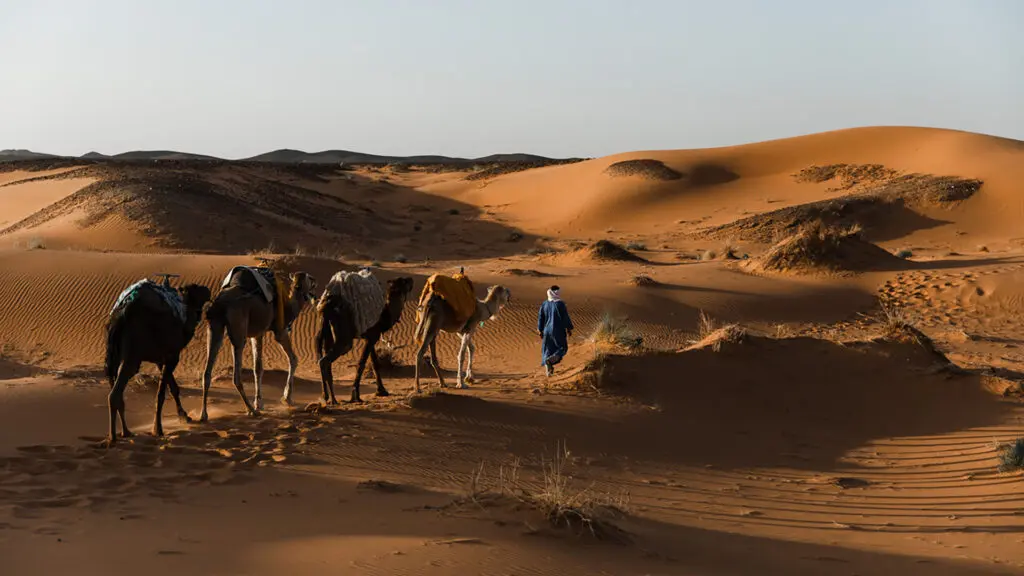
Summer in the Moroccan Sahara: June to August
Summer brings the hottest conditions of the Sahara desert seasons. Travelers can still visit, but anyone hoping to spend long stretches walking across the dunes or exploring during the middle of the day should plan carefully.
Morning and evening become the best times for most activities. Camel rides, short walks and scenic stops are usually more comfortable outside the hottest hours, while the middle of the day is better used for rest and recovery.
For travelers who are sensitive to heat or visiting the Sahara for the first time, October through April is usually the more comfortable choice. Summer can still work, but it needs a slower pace, flexible planning and realistic expectations about how much time you will spend outdoors. For extra guidance before choosing warmer travel dates, our guide on visiting Morocco’s Sahara Desert safely covers practical advice for preparing well.
September and the Return to Cooler Desert Travel
September is a transition month between peak summer heat and the cooler travel conditions that usually begin in October. Warm days can still remain, but the season is gradually moving toward more comfortable desert weather.
For travelers whose dates fall in early fall, September can work when the itinerary is flexible. Outdoor experiences should still be planned around the cooler parts of the day, rather than following the same schedule you might choose in November, January or March.
As the month progresses, longer periods outside usually become easier. By October, the Sahara enters the main cooler travel season, which continues through winter and into spring. If you are still deciding how the desert fits into your Morocco route, our guide on where the desert is in Morocco and how to get there can help with the planning.
What to Pack for Changing Sahara Temperatures
Whatever season you choose, layers are one of the most useful things to bring. Desert conditions can change noticeably between daylight and evening, particularly during the cooler months when temperatures fall after sunset.
Light clothing that can be added or removed makes it easier to adapt throughout the day. During winter, warmer evening layers become more important, while sun protection remains useful whenever you are spending time in exposed desert surroundings.
Rather than repeating a full packing list here, our guide to the best clothes for the Sahara Desert explains what to wear in more detail. You can also use our Sahara travel checklist when preparing for your trip.
Plan Your Sahara Stay Around the Experience You Want
The best time to visit the Moroccan Sahara depends on what you want from the journey. October through April offers the broadest window for cooler desert travel, but fall, winter and spring each bring a different feel to the experience.
At Desert Luxury Camp, we recommend choosing travel dates around your preferred pace, comfort and plans. The right season should support the way you want to spend time in the desert, whether that means cooler evenings, active days, a slower camp stay or more time around the dunes.
Your Sahara stay can also be shaped around the rest of your Morocco itinerary. Travelers arriving from Marrakech can move through mountain roads, valleys and southern towns before reaching the desert, allowing the journey toward the dunes to feel like part of the experience rather than only a transfer.
Through our Morocco custom trips, we can help shape the route around your travel dates, preferred season and ideal pace. If you are still comparing stay options, our guide to which Morocco desert camp is right for you can help you choose the experience that fits your trip.
When you are ready to begin planning, contact Desert Luxury Camp. Our team can help you create a Sahara journey that fits the season, your wider Morocco itinerary and the experience you want from your time in the dunes.


